
The History of Cappadocia
Uncover the epic history of Cappadocia, from its volcanic beginnings and hidden underground cities to Byzantine frescoes and cave sanctuaries. Experience how geology and faith shaped this timeless region of Turkey.
5 min read


A Land Shaped by Fire
In the heart of central Turkey lies a place that looks more like a dreamscape than a landscape. Cappadocia’s story began millions of years ago when erupting volcanoes—Mount Erciyes, Mount Hasan, and Mount Melendiz—filled the sky with ash and molten rock. Over time, these eruptions layered the land with soft volcanic tuff and harder basalt. This formed a geological canvas on which nature slowly sculpted the surreal shapes you see today. Wind, rain, and time carved valleys, canyons, and the famous “fairy chimneys” that rise from the ground like ossified flames.
This natural artistry took millions of years to perfect, and is ongoing. You can walk through the honeycombed cliffs and still watch erosion quietly at work, slowly reshaping Cappadocia’s face grain by grain. Whether you see Cappadocia from the ground or from a hot air balloon above, the sensation is the same: awe, serenity, and the feeling that time itself moves differently here.
For ancient industrious communities, this unique volcanic landscape provided unique shelter opportunities. Over the millennia, people carved homes and later churches out of the caves, and carved entire cities underground. Let’s dig into the history of Cappadocia, above and below the surface.


The Hidden Cities Beneath the Earth
Beneath Cappadocia’s soft volcanic crust lies an abandoned urban labyrinth. Over thirty underground cities have been identified so far, with Derinkuyu and Kaymaklı being the largest and most impressive. Some extend as deep as eighty metres and could once shelter thousands of people. Carved from the pliable tuff, a type of rock formed from compacted volcanic ash, these cities were feats of engineering, complete with air shafts, kitchens, chapels, and secret tunnels connecting entire communities. Standing inside these spaces, you can almost hear echoes of the lives that once pulsed through them.
The ingenuity of these subterranean dwellings was life-saving. During times of invasion and unrest, entire populations vanished below ground, protected by rolling stone doors that could seal off passages in seconds. Life continued quietly beneath the earth. The soft stone walls became both sanctuary and fortress, offering safety in a world that was anything but predictable.
Even today, archaeologists continue to find new chambers and passageways, revealing just how vast this hidden world truly is. As you walk through the narrow tunnels and dimly lit chambers, the feeling is both humbling and electrifying. You’re walking through ancient and ingenious history. Let’s talk more about what motivated people to build these extraordinary underground cities.


Life Beneath the Surface
The decision to live underground in Cappadocia was as practical as it was visionary. The volcanic tuff, while easy to carve, offered something even more valuable: natural insulation. Underground, the air remains cool in the fierce Anatolian summers and warm during icy winters. For ancient families, it meant safety, comfort, and stability in a region where the climate could be unforgiving. These homes were low-maintenance and endlessly adaptable. Need more space? You simply carved another room.
Security, however, was just as crucial. Central Anatolia sat on the crossroads of empires, and history here was often turbulent. As wave after wave of armies swept through, the people of Cappadocia found refuge underground. The network of tunnels became a hidden world where communities could survive for months with stored food and livestock. What began as a necessity evolved into a cultural norm, passed down through generations until cave living became a way of life. With so much going on below the surface of Cappadocia, what was happening above ground?
The Byzantine Legacy in Stone
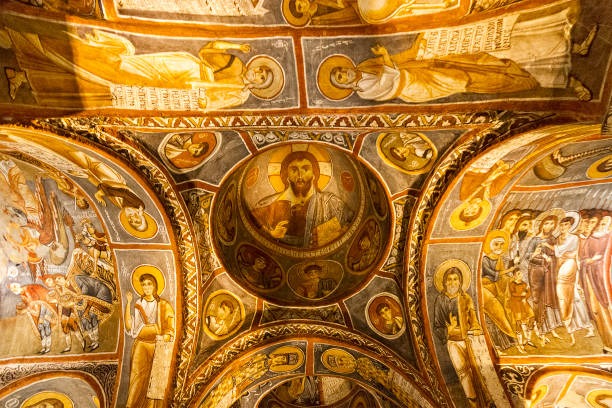
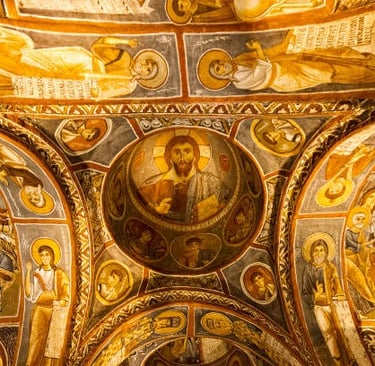
Among Cappadocia’s treasures, none are more evocative than its rock-cut churches. From the fourth century onward, early Christian monks sought solitude and safety in these remote valleys. Over time, they carved entire sanctuaries directly into the living rock — not crude shelters, but intricate churches complete with domes, columns, and painted frescoes that rival those in great cathedrals. The Göreme Valley became a heart of Byzantine monastic life, and the landscape transformed into a sacred open-air museum.
These churches trace the evolution of faith and artistry through centuries of change. The Iconoclastic period in the eighth and ninth centuries saw the destruction of many religious images, but when it ended, Cappadocia’s artists responded with a burst of creativity. The walls once bare came alive again with images of Christ Pantocrator, the Virgin Mary, and biblical stories painted in vivid reds, blues, and ochres. Standing inside one of these sanctuaries, such as the Dark Church or Tokalı Kilise, you’ll see colours that have survived more than a thousand years, protected by the stillness of stone.
Each fresco is a conversation between faith and craftsmanship, each brushstroke a whisper from another time. The balance of art and devotion is palpable. Even the smallest chapel feels monumental in its intent. And as you leave the dim glow of these rock-cut sanctuaries and step into sunlight, the feeling lingers.


A Living Connection Through Time
Cappadocia is a region forged by volcanic fire, shaped by nature, and sanctified by human hands. Walking through its valleys, you sense the rhythm of ages layered one upon another. From the deep quiet of underground cities to the painted calm of rock-cut churches, it’s a journey through the very essence of human perseverance and beauty.
Today, these ancient spaces are finding new life once again. In Göreme, Ürgüp, and Uçhisar, ancient dwellings have been transformed into boutique hotels, restaurants, and museums, offering visitors the chance to sleep and dine within living history. It’s an experience that merges comfort with authenticity, letting you feel the heartbeat of Cappadocia in every stone.
Cappadocia reminds you that beauty and faith can rise even from ash and rock. The fairy chimneys still change with the wind, the frescoes still glow with colour, and the valleys still echo with stories. With Wanderwell, your journey through Cappadocia connects you to centuries of life, art, and the enduring spirit of creation.
Want to read more? The Sleepy Traveller: Best Cave Hotels in Cappadocia. The Curious Traveller: 10 Fun Facts About Ephesus in Turkey. The Hungry Traveller: 5 Best Cities in Turkey to Eat Mezze. The Curious Traveller: What is a Whirling Dervish Ceremony?
For the latest updates sign-up below!
