
Where is Santa Claus from?
Read about the extraordinary evolution of Saint Nicholas of Myra into the modern Santa Claus, tracing how a 4th-century Turkish bishop became a global symbol of festive generosity, and the ultimate travel icon.
5 min read


Who is Santa Claus?
Every December, children around the world eagerly await Santa Claus, the jolly man in red who delivers gifts to nice (not naughty) children via the chimney on Christmas Eve. But where does this captivating cultural figure come from? Few realise that Santa Claus’s origin story traces back almost 1,700 years ago to a devoted Christian bishop living along the Mediterranean coast of present-day Turkey. The transformation from Saint Nicholas of Myra into today’s Santa is a fabulous journey shaped by cultural exchanges, migrations, and centuries of imaginative reinvention. Let’s get into it!
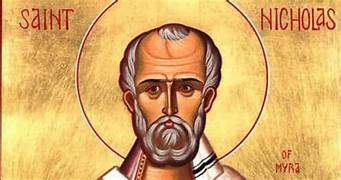
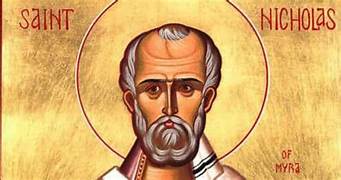
The Real Saint Nicholas
A man named Saint Nicholas was born around 270AD in Patara, a bustling port city in ancient Lycia. He later became a bishop of Myra in modern-day Demre, famous for its rock-but tombs and ancient theatre. Nicholas was a solemn religious leader celebrated for his deep faith, strong convictions, and compassion for those in need. He had no idea that myth and travel would eventually transform him into a beloved icon in a red suit carrying an eternally full bag of gifts.
Nicholas was always known as a protector of children associated with gift-giving. His most famous legend tells of three sisters whose father lacked the funds to provide dowries. Without them, the girls risked being sold into servitude. Nicholas learned of their situation and, over three nights, secretly delivered bags of gold by dropping them through a window or down the chimney. This anonymous kindness saved the family and established his reputation as a giver of secret gifts.
Other stories recount Nicholas calming storms at sea, protecting children from harm, and defending the oppressed. His miracles and generosity became widely known across the Christian world. After his death on December 6, 343 AD, he was canonised, and his feast day grew into one of the most beloved celebrations of the medieval calendar.
As we leave the shores of Lycia and move into northern Europe, the legacy of Nicholas continues to evolve in surprising ways.
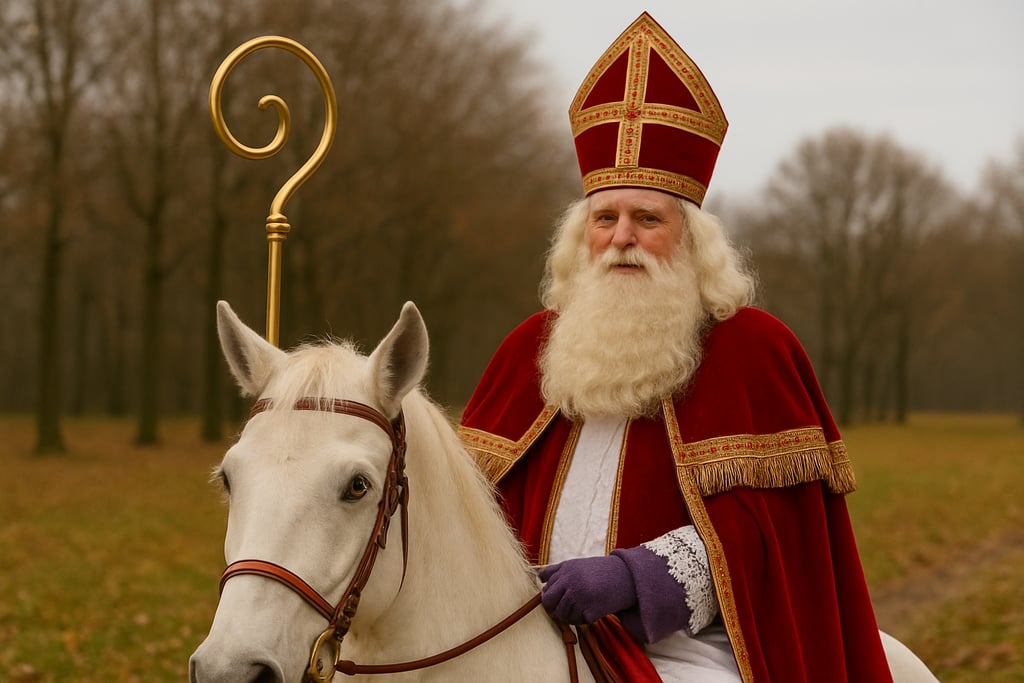
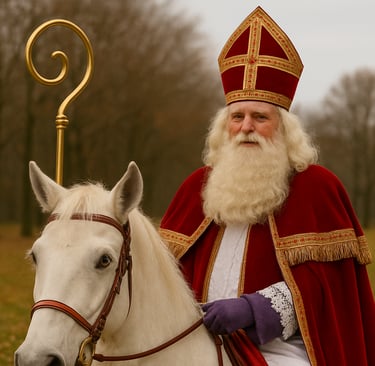
From Saint to Sinterklaas
For centuries after his passing, Saint Nicholas remained one of Europe’s most cherished saints. Children would place shoes by the fireplace on the eve of his feast day, hoping to find them filled with sweets the next morning. It was in the Netherlands and Belgium, however, where his story flourished most vividly.
On December 6th, Dutch communities created a detailed celebration around a figure they call “Sinterklaas”, portraying him as a dignified bishop wearing red and white vestments and carrying ceremonial staff. According to tradition, Sinterklaas arrived each year by steamboat from Spain and travelled on a white horse, accompanied by helpers. He carried a large book recording whether children had behaved well.
By the early 17th century, Dutch colonists brought these traditions to New Amsterdam, later renamed New York when it came under British control. Dutch customs celebrating Sinterklaas planted the seeds for what would gradually become the American Santa Claus.
With the Dutch traditions established in the New World, the next stage of transformation unfolded across a young and imaginative America.


The American Transformation
The linguistic shift from Sinterklaas to Santa Claus was gradual. The first known reference to Santa Claus was in 1773-4 in a New York newspaper. In 1809, Washington Irving published "A History of New York," featuring references to Saint Nicholas as the city’s patron saint. His playful portrayal began steering the image away from a solemn bishop toward something more magical. References to St Nicholas as “S. Claus” or “Santa Claus” became more frequent.
The turning point arrived in 1823 with the poem "A Visit from St. Nicholas," often called "’Twas the Night Before Christmas" and attributed to Clement Clarke Moore. This poem reshaped Santa entirely, presenting him as a cheerful, plump figure described as a "right jolly old elf" whose belly shook "like a bowl full of jelly." Moore introduced the famous flying reindeer, gave them names, and shifted the gift-giving tradition from December 6 to Christmas Eve.
American readers embraced this enchanting image. The poem created the scene of Santa sliding down chimneys, filling stockings, and soaring over rooftops in a sleigh. This imaginative version resonated far more with American households than the formal European bishop.
As the new Santa gained definition through words, the next step was to give him a visual form that could travel even farther.


Visualising Santa
While Moore provided the narrative, it was political cartoonist Thomas Nast who shaped Santa’s modern appearance. Between 1863 and 1886, Nast illustrated Santa Claus for Harper’s Weekly, adding details that are now iconic. His drawings introduced the North Pole workshop, industrious elves, the record of naughty and nice children, and Santa reading letters from hopeful youngsters.
Nast’s Santa wore a red coat trimmed with white fur, had a full white beard, and carried the warmth of a kindly grandfather. His version differed dramatically from the austere bishop of centuries before and quickly captured the public imagination.
During the 20th century, Coca-Cola’s advertising campaigns, beginning in 1931 with artwork by Haddon Sundblom, cemented this image internationally. Although Coca-Cola did not invent the red suit, their widespread adverts ensured this friendly, rosy-cheeked Santa became the global standard.
With Santa firmly established visually, his influence began to spread across continents in wonderfully diverse ways.


A Global Icon
Today’s Santa Claus reflects an extraordinary blend of traditions. From Saint Nicholas came the spirit of generosity and care for children. From Dutch culture came the custom of gift-giving and the moral record of behaviour. From American storytelling came reindeer, the North Pole workshop, and magical chimney visits. From global commerce came the unified red-suited figure known worldwide.
Santa now appears in countries far beyond Christian or Western contexts. In Japan, where Christmas is celebrated socially rather than religiously, "Santa-san" is a beloved seasonal figure. In Brazil, Santa may wear lighter clothing to cope with the tropical summer. Around the world, local customs adapt the Santa story while keeping its essence intact.
As this international figure continues to evolve, one thing remains clear: his core message transcends borders.
The Enduring Legacy
What makes Santa’s evolution remarkable is that despite countless changes, the heart of the story remains the same. Whether Saint Nicholas secretly delivered gold to save young women from hardship or the modern Santa brings toys to eager children, the spirit of generosity endures.
The historical Nicholas would be astonished by the scale of his legacy, yet he would likely welcome the continued emphasis on kindness and gift-giving. His transformation from a 4th-century bishop to a global cultural icon shows the enduring power of storytelling, the resilience of cultural practices, and how we can move around the world with our most valued traditions while remaining open to change. For us here at Wanderwell, you could say Santa Claus is the ultimate travel icon.
Want to read more? The Sleepy Traveller: Best Cave Hotels in Cappadocia. The Curious Traveller: 10 Fun Facts About Ephesus in Turkey. The Hungry Traveller: 5 Best Cities in Turkey to Eat Mezze. The Curious Traveller: What is a Whirling Dervish Ceremony? The Curious Traveller: The History of Cappadocia.
For the latest updates sign-up below!
