
Korean Convenience Store Culture
Experience Korean convenience store culture with 7-Eleven meals, budget-friendly eating, must-try items, and vibrant 24-hour food spots. Learn what makes Korean convenience stores a foodie paradise!
6 min read
The Conveni Food Phenomenon
South Koreans have a love affair with convenience stores. The country boasts over 50,000 of them, and the average Korean visits one at least 2-3 times per week. No wonder. Korean convenience stores, affectionately called "conveni" or "pyeonuijeom," have evolved far beyond their Western counterparts to become beloved food institutions where you can get tasty and affordable grub at all hours. Students camp out with steaming noodle bowls at 2am and office workers grab restaurant-quality meals after long shifts. This is a food culture Wanderwell respects.
Whether you're planning your first trip to Seoul or already daydreaming about your return visit, use this beginner’s guide to conveni culture so you can indulge in this accessible and authentic Korean foodie scene. Let’s get to it!


Need a Hotel in Seoul?
Here Are Our Recommendations:
$$$ The Plaza Seoul
- Click here for rates & availability
$$ AC Hotel by Marriott Seoul Gangnam
- Click here for rates & availability
$$ 9 Brick Hotel
Must-Try Items at Korean Convenience Stores
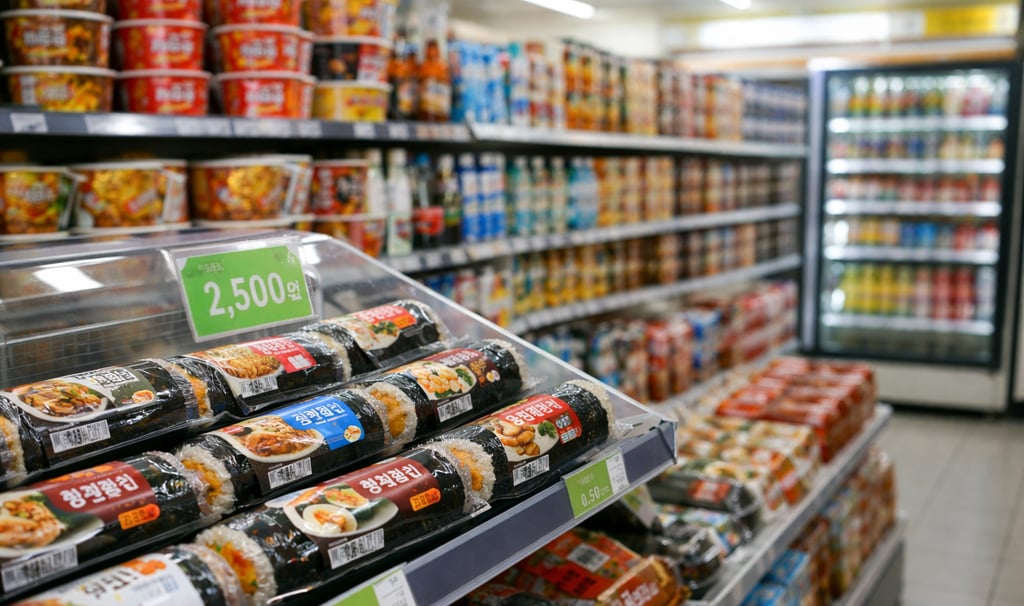
Triangle kimbap, or samgak kimbap, sits at the heart of Korean convenience store culture. Seasoned white rice envelops various fillings and is carefully wrapped in seaweed to form a perfect triangle. A true conveni master can be identified by their ability to deftly unpack the three-layer wrapper. The genius lies in how the seaweed stays crispy until the moment you're ready to eat, creating that perfect textural contrast with seasoned rice. Flavours range from classic tuna mayo to spicy kimchi, bulgogi beef, and even cream cheese combinations that shouldn’t taste good but are somehow delicious. These portable rice triangles cost between 1,000-1,500 won and have fuelled countless late-night study sessions and early morning commutes.
Korean corn dogs deserve their Instagram fame with potato-chip crusting that delivers ridiculous crunch alongside melted cheese centres. Tteokbokki cups bring restaurant-quality spicy rice cakes to your table in minutes, whilst fresh gimbap rolls feature ingredients like bulgogi, vegetables, and cheese. The dessert section features hotteok, bungeoppang filled with sweet red bean paste, and an ever-rotating selection of Korean-style pastries. Don't overlook the drinks, from legendary banana milk to seasonal lattes, makgeolli rice wine, and dozens of soju flavours that have become K-culture staples.
Let you culinary creativity run wild in the instant noodle section where you can customise basic packs with add-ons from the refrigerated section. Grab Shin Ramyun or Buldak, then elevate it with sliced cheese that melts into creamy perfection, soft-boiled eggs, frozen dumplings, or rice cakes. Is your mouth watering yet?
With your basket full of delicious discoveries, you're ready to experience the unique 24-hour culture that makes eating at Korean convenience stores such a special social ritual.


The 24-Hour Culture and Convenience Store Experience
Korean convenience stores never sleep. Within their fluorescent-lit walls, students claim corner tables at midnight, their textbooks spread out alongside still-steaming bowls. Office workers stop by after late shifts not just to grab dinner but to decompress with colleagues, turning modest seating areas into impromptu bonding sessions. The phenomenon of "convenience store dates" has become so popular among Korean youth that it's considered perfectly romantic to spend an evening in the conveni enjoying simple pleasures without the pressure or expense of fancy restaurants.
The social dynamics shift with seasons and times of day. Winter brings crowds seeking hot meals and comforting warmth. Summer sees people gravitating toward cold noodles, ice cream, and refreshing drinks after sweating through Seoul's humid heat. The 3am crowd differs entirely from the 7am rush, lunchtime workers, and post-dinner snackers. Each group brings their own energy and rituals.
Conveni have become Instagram-worthy destinations in themselves, with mukbang creators filming elaborate hauls and tourists documenting their culinary victories. It’s a welcoming atmosphere, with no pressure to buy quickly and leave, no judgement about sitting for hours over a 3,000 won meal. Everyone's seeking the simple comfort of good food in a clean and safe space.
So, which chains offer the best experiences and how do they differ across Korean regions?


Regional Differences and Store Chain Comparisons
GS25, CU, 7-Eleven, Emart24, and Ministop each bring distinct personalities to Korean convenience store culture. GS25 has built its reputation on premium partnerships and exclusive products, often collaborating with popular Korean brands and celebrity chefs to create limited-edition items. CU dominates with the most locations nationwide and tends toward affordable pricing with aggressive promotional deals. 7-Eleven Korea operates differently from its international franchises, offering reliable quality with distinctly Korean twists. Emart24 leverages its supermarket connection to provide fresher produce, whilst Ministop has earned cult status for superb soft-serve ice cream and indulgence desserts.
Regional variations add another layer of diversity. Seoul stores stock more international products and trendy limited-edition items. Busan's coastal location means more seafood-oriented snacks. Jeju Island stores surprise visitors with local omija berry drinks, hallabong orange products, and black pork items unavailable on the mainland. Even private label brands compete seriously with national names, offering quality that often matches or exceeds big brands at lower prices.
The competitive landscape means each chain constantly innovates to win your loyalty, rolling out new products and creating exclusive collaborations that become genuine cultural moments. Visit GS25 for fancy ready-made meals, pop into CU for 1+1 deals on drinks, grab Ministop for dessert, and end up at whichever chain is closest when late-night emergencies strike.
Next up: practical tips to navigate your first visit like a confident local.


Tips for First-Time Visitors to Korean Convenience Stores
Faced with unfamiliar packaging and Korean text, your first conveni experience can feel overwhelming, but a few basic phrases transform you into a confident shopper. Say "eolmayeyo" to ask prices, "igeo juseyo" to request items, and "gamsa hamnida" to thank staff. The layout is intuitive: refrigerated ready-made meals along the back wall, instant noodles in centre aisles, drinks in glass-front coolers, and snacks lining the sides. Pro tip: expiration dates use the year-month-day format.
Here's some etiquette advice. You're welcome to use seating areas as long as you'd like, but you're expected to dispose of your own rubbish in designated bins, wipe down tables, and keep noise levels reasonable, especially during late-night hours in residential neighbourhoods. Payment flexibility exceeds most Western stores, accepting cash, Korean and international credit cards, and mobile payment apps like KakaoPay and Naver Pay. Staff are generally helpful if you gesture toward items or show photos, though they might have limited English.
Timing your visits strategically maximises your experience, with fresh items arriving mornings around 6-7am and some stores marking down items approaching expiration in late evening. Free amenities include hot water dispensers, microwaves for heating meals, and utensils all available without asking. Avoid passing up Korean items for familiar Western brands. Korean products often taste better, cost less, and provide the authentic experience you travelled to enjoy.


Your Gateway to Authentic Korean Daily Life
Korean convenience store culture transcends simple transactions or cheap meals, providing an authentic window into the daily rhythms and innovative spirit that defines modern Korea. Whether you're a budget-conscious traveller, a K-culture enthusiast wanting authentic experiences beyond tourist attractions, or simply someone who appreciates good food, Korean convenience stores deliver satisfaction that punches well above their humble price points. So join millions of Koreans in celebrating the beautiful simplicity of conveni culture that turns ordinary moments into extraordinary memories, one perfectly convenient meal at a time.
Want to read more? The Curious Traveller: The Ultimate 3 Days in Seoul Itinerary. The Hungry Traveller: How to Grill Like a Local: Korean BBQ. The Curious Traveller: DMZ Tours: The Divided Heart of the Korean Peninsula.
For the latest updates sign-up below!
Other Articles
